Home NEET Botany MCQs NEET Zoology MCQs NEET Syllabus
🌱

Morphology of Flowering Plants PYQs

Class XI Biology NCERT Based NEET Practice

📘 Concept Based 📝 Exam Level 🤖 AI Explanations
This page score: 0/28
27 questions in this chapter
Question 21 of 27
🟢 Re NEET 2026 📘 CLASS XI
Phyllotaxy is the pattern of arrangement of _________.
Phyllotaxy refers to the arrangement of leaves on the stem or branch of a plant.
Question 22 of 27
🟢 Re NEET 2026 📘 CLASS XI
Which of the following are characteristic features of Solanaceae family?

(a) Flowers are bisexual and actinomorphic
(b) Calyx have five sepals and are united
(c) Androecium have five stamens and are epipetalous
(d) Ovary is inferior

Choose the correct answer from the options given below:
Solanaceae flowers are bisexual, actinomorphic, pentamerous, epipetalous and possess a superior ovary.
Question 23 of 27
🟢 Re NEET 2026 📘 CLASS XI

Match List-I with List-II.

List-I List-II
A. Marginal placentation I. Argemone
B. Axile placentation II. Tomato
C. Parietal placentation III. Primrose
D. Free central placentation IV. Pea

Choose the correct answer from the options given below:

Pea shows marginal placentation, tomato axile, Argemone parietal and Primrose free central placentation.
Question 24 of 27
🟢 NEET 2026 📘 CLASS XI
In racemose inflorescence,
In racemose inflorescence, the main axis continues to grow and younger flowers are produced towards the apex (acropetal succession).
Question 25 of 27
🟢 NEET 2026 📘 CLASS XI
In angiosperms, root hairs arise from which one of the following regions of the root?
Root hairs are unicellular extensions of epidermal cells formed in the region of maturation.
Question 26 of 27
🟢 NEET 2026 📘 CLASS XI
Match List-I with List-II:

List-I (Placentation)List-II (Example)
A. MarginalI. Mustard
B. AxileII. Pea
C. ParietalIII. Marigold
D. BasalIV. Lemon
Marginal placentation occurs in pea, axile in lemon, parietal in mustard and basal in marigold.
Question 27 of 27
🟢 NEET 2026 📘 CLASS XI
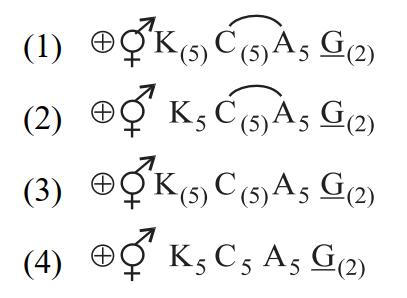
Which of the following floral formula is the correct floral formula of Solanaceae family ?
Question illustration
Explanation:

The floral formula of Solanaceae (e.g., potato, tomato) in NCERT is pentamerous and gamopetalous with a superior, syncarpous ovary. The standard formula is K5 C5 A5 G(5) — 5 sepals (calyx), 5 petals fused into a tube (corolla), 5 stamens, and a 5-celled syncarpous ovary. Thus, option 3 is correct.

🧠 Did You Know?

Solanaceae flowers are usually regular and zygomorphic in some genera, but NCERT describes the common pentamerous, actinomorphic flowers with fused corolla in this family.

💡 NCERT Memory Line:

Solanaceae: K5 C5 A5 G(5) – pentamerous, fusion in corolla, superior syncarpous ovary.